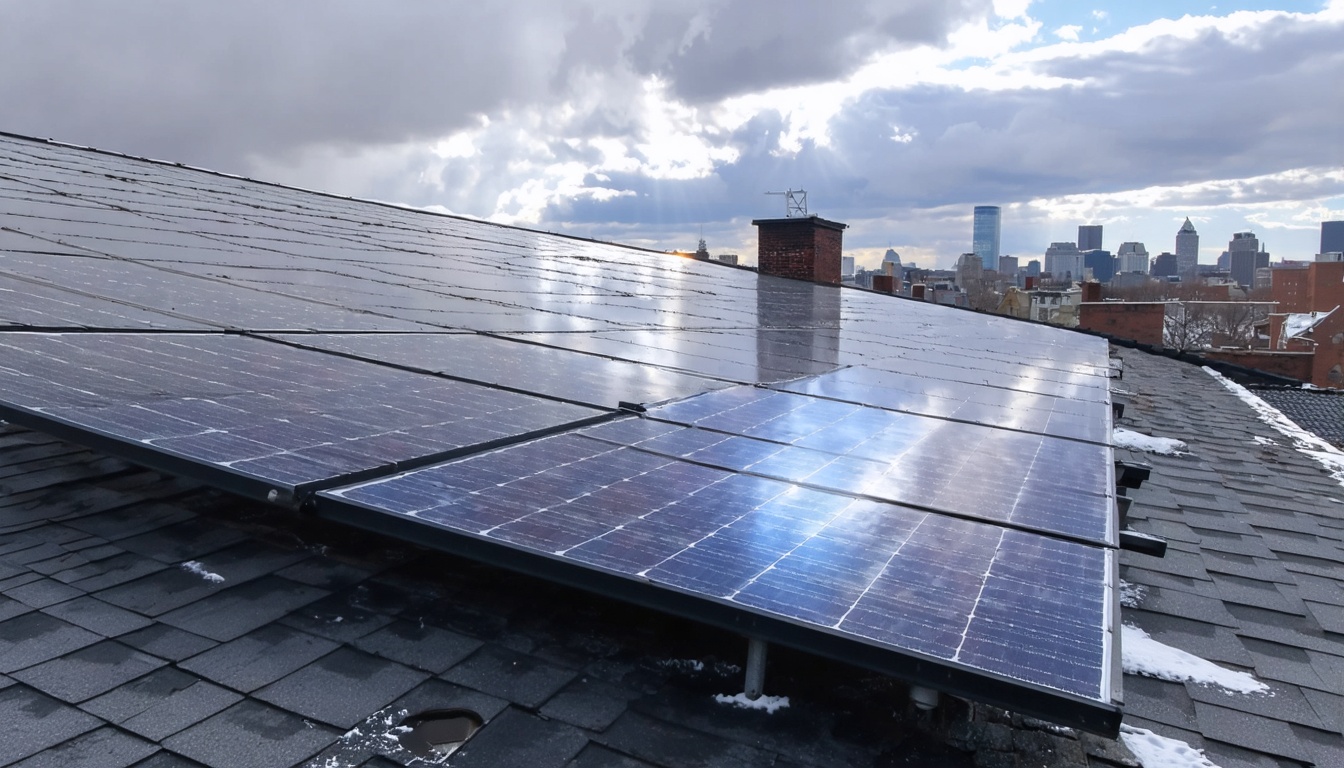
How Local Weather Shapes Solar Energy Decisions in Boston
When evaluating the potential for solar power in Boston, local weather patterns are an important consideration in the decision-making process. While the focus may often be on the number of sunny days, factors such as cloud cover, winter snow accumulation, and variation in temperatures significantly influence the practicality and economic viability of solar energy systems. Boston experiences a humid continental climate, characterized by cold winters and warm summers. The winter months can bring substantial snowfall, which can temporarily obstruct solar panels, potentially reducing their efficiency. In addition, the presence of cloud cover can decrease the amount of solar radiation reaching the panels, impacting energy generation. On the other hand, these weather-related challenges can be addressed through effective system design. For example, solar panel installations can be optimized for winter performance by adjusting their angle to promote snow shedding and maximize sunlight exposure. Furthermore, advances in solar technology, such as the development of more efficient panels, continue to improve performance in less-than-ideal weather conditions. Additionally, understanding and leveraging local policies and incentives can further bolster the feasibility of solar energy initiatives in Boston. Local government and utility incentives can offset some of the costs associated with installation, making the investment more attractive even in a region with variable weather. In summary, while Boston's unique climate presents certain challenges for solar energy generation, thoughtful system design, effective policy frameworks, and advancements in technology can enhance the practical application and profitability of solar energy solutions in the city. Evaluating these factors allows for more informed decision-making regarding solar investments.
Patterns of Solar Power Growth in Boston
The development of solar power in Boston illustrates a notable transformation in the region's energy context. In recent years, there has been an observable increase in the installation of rooftop solar panels and small-scale solar systems, with many residents turning to local professionals such as those listed at Boston Solar Panel Installers to implement these solutions. This trend is influenced by state policies aimed at promoting renewable energy, alongside a heightened demand for electricity, especially during warmer months when peak energy usage occurs.
The amount of solar energy generated in Boston has achieved levels comparable to potential outputs from wind and battery storage systems. Moreover, it is essential to consider that climate variability and the occurrence of extreme weather events necessitate continuous updates to energy forecasts from entities such as the Independent System Operator (ISO) and market analysts.
The media's role, including coverage and press releases from relevant organizations, along with analysis from neighboring states like Rhode Island and New Hampshire, enhances public understanding of solar power developments.
Ultimately, the rising integration of solar energy in Boston reflects a cautious response to environmental challenges and the increasing demand for dependable energy sources.
The Role of Distributed Solar in Electricity Demand
During times of heightened electricity demand in Boston, particularly during summer heat waves, distributed solar installations play an important role in alleviating that demand. The implementation of rooftop solar panels contributes to lessening the burden on the electrical grid, particularly during extreme weather events that lead to increased electricity consumption.
In New England, locally generated solar energy—backed by supportive policy measures and energy storage options—can result in notable cost reductions for consumers. Recent data indicated that Massachusetts generated savings of approximately $19.4 million in one day due to the contributions of solar energy. These financial impacts are significant when assessing the effects of renewable energy on peak demand.
The Independent System Operator of New England (ISO-NE) actively observes market changes and demand projections, revealing a substantial growth in the installation of solar energy systems in states such as Rhode Island and New Hampshire.
This growth signifies an ongoing shift towards the integration of renewable energy sources within the regional energy grid, addressing both economic and environmental challenges linked to traditional energy sources.
Seasonal and Daily Weather Impacts on Solar Output
Weather patterns in Boston exhibit significant seasonal variation that affects solar energy production. The output from rooftop solar panels is influenced by climatic factors such as wind speed and precipitation levels. Typically, solar energy generation peaks in the summer months when electricity demand rises across New England, from Rhode Island to New Hampshire.
However, extreme weather events and shorter daylight hours in winter can hinder solar energy production. These conditions result in a reduction of solar output, underscoring the importance of accurate forecasting and effective battery storage solutions. Reliable forecasts help optimize energy use, while battery systems enable electricity storage for later consumption.
Additionally, state policies, market signals from Independent System Operators (ISO), and communication from media sources are critical in guiding strategies to alleviate pressure on the electricity grid and manage energy consumption effectively.
Coordinated efforts in these areas are essential for maximizing the potential of solar energy and ensuring a stable electricity supply throughout the year.
Behind-the-Meter Solar and Shifting Demand Profiles
Behind-the-meter solar installations generate electricity at residences and commercial properties, resulting in notable changes to demand profiles in Boston. The increasing use of rooftop solar panels and battery storage systems reduces dependency on grid electricity. This trend is further reinforced by policy initiatives in New England states, including New Hampshire and Rhode Island, which encourage the adoption of renewable energy sources.
The electricity generated by these behind-the-meter systems influences both the quantity and timing of electricity demand. Notably, peak electricity usage may occur after sunset, particularly during high summer temperatures or extreme weather events.
In light of these shifting demand patterns, ISO New England and market operators are adjusting their forecasting methodologies accordingly. Factors such as climate variables and wind patterns significantly affect these forecasts.
The rise in behind-the-meter solar installations is a notable trend in New England, contributing to a more adaptable and responsive energy landscape for residents.
Addressing Variability: Advances in Forecasting and Grid Management
As solar generation continues to grow in Boston's energy landscape, managing its variability has become an essential focus for grid operators. ISO New England has improved its forecasting capabilities by employing a dedicated meteorologist to enhance the accuracy of predictions regarding solar and wind output, particularly during the summer months when electricity demand peaks.
Current daily forecasts account for the contributions from rooftop solar installations and behind-the-meter generation, leading to better insights into overall electricity demand.
Strategies such as the deployment of fast-start resources and negative market pricing are crucial for mitigating fluctuations in power generation, especially during adverse weather conditions or heat waves.
In addition, the integration of battery storage systems, supportive policy frameworks, and data sharing from neighboring states like Rhode Island and New Hampshire are fundamental to ensuring grid reliability.
These initiatives are designed to alleviate pressure on the grid while also providing valuable information for public communication efforts by energy providers and regulatory bodies.
The Influence of Extreme Temperatures on Solar Performance
During periods of elevated temperatures in Boston, electricity demand generally rises as residents utilize air conditioning more frequently. This increase in demand exerts considerable pressure on local electrical grids.
In the New England region, encompassing states such as Rhode Island and New Hampshire, harsh summer conditions exhibit notable impacts on solar energy output and overall electricity consumption.
Several factors can bolster the role of solar energy during high-demand periods. For example, rooftop solar panels produce electricity during peak usage times. Moreover, the addition of battery storage systems facilitates better management of energy supply and demand.
The effective deployment of solar energy resources during these peak hours can decrease dependence on traditional fossil fuel sources, as supported by data released by the Independent System Operator (ISO).
The establishment of supportive policy frameworks and market incentives is essential in encouraging the adoption of resilient energy solutions.
By maintaining efforts and continued investment in solar technologies, there is potential for residents in New England to experience improved energy savings in the future.
Metrics, Tools, and Strategies for Optimizing Solar Use
The forecasting of solar energy output in Boston presents challenges due to the city's diverse weather patterns. However, improvements in forecasting tools and real-time data accessibility are enhancing the operational efficiency of solar energy systems. Such advancements enable better management of electricity supply throughout the year.
Weather-related variations, including climate changes and wind patterns, can significantly impact energy demand. Accurate forecasting, along with relevant metrics such as megawatt-hours generated, is vital for effective energy planning at the state level.
Additionally, battery storage systems are essential for reducing grid pressure, especially during extreme weather events or high electricity demand periods, such as summer heat waves.
Policy initiatives within New England, particularly in states like Rhode Island and New Hampshire, are fostering the adoption of rooftop solar panels. These initiatives contribute to a more sustainable energy landscape and may lessen dependence on conventional energy sources.
The integration of such technologies and policies highlights the potential for enhanced energy management and environmental benefits.
Conclusion
When considering solar energy options in Boston, it is essential to take into account the influence of local weather conditions. Factors such as snow accumulation, cloud cover, and seasonal variations in sunlight can significantly impact the performance and economic viability of solar systems. Snow can obstruct solar panels, reducing their efficiency during winter months. However, the reflective properties of snow can sometimes enhance solar output when the panels are cleared. Cloud cover can also limit sunlight exposure, leading to lower energy generation. It is important to analyze historical weather data to understand typical patterns and how they may affect energy production. Seasonal variations further complicate the solar energy landscape in Boston. During summer, longer daylight hours can improve energy generation, while winter months may see reduced output due to shorter days and adverse weather conditions. To address these challenges, employing smart design principles, such as tilt optimization and panel placement, can help maximize sunlight capture. Moreover, incorporating advancements in solar technology, such as bifacial panels or systems with enhanced snow-shedding capabilities, can improve overall efficiency. Staying informed about local policies, incentives, and regulations is also crucial for making informed decisions and optimizing the economic return on solar investments. In conclusion, while Boston's unique climate presents specific challenges for solar energy implementation, careful planning and adaptation to local conditions can lead to effective and resilient solar energy solutions. Understanding these variables is vital for achieving a successful solar energy strategy in the region.